This is a summary write-up describing the culminating project for my Master of Architecture at the University of Minnesota.
Background
Daylighting has been strongly associated with architecture throughout the
world since prehistoric times. Allowing daylight to form architecture and allowing
architecture to be formed by daylight can be best accomplished by understanding
the effects and behaviors of the sun from an objective understanding in addition
to a more subjective perception. This project incorporates both the objective and
subjective understandings of the sun’s behavior to demonstrate the architectural
potential of daylight using representations of collected information in addition
to generated proposals for interventions at locations throughout the world. The
project is framed under the concept of heliotropism, which is the phenomenon
by which animals and plants turn towards the sun. This project studies how architecture can allow humans to turn towards the sun and better understand their
positioning in the world and the universe.
he·li·ot·ro·pism
the directional growth of a plant in response to sunlight
the tendency of an animal to move toward light1
Understanding the Dynamic Qualities of the Sun
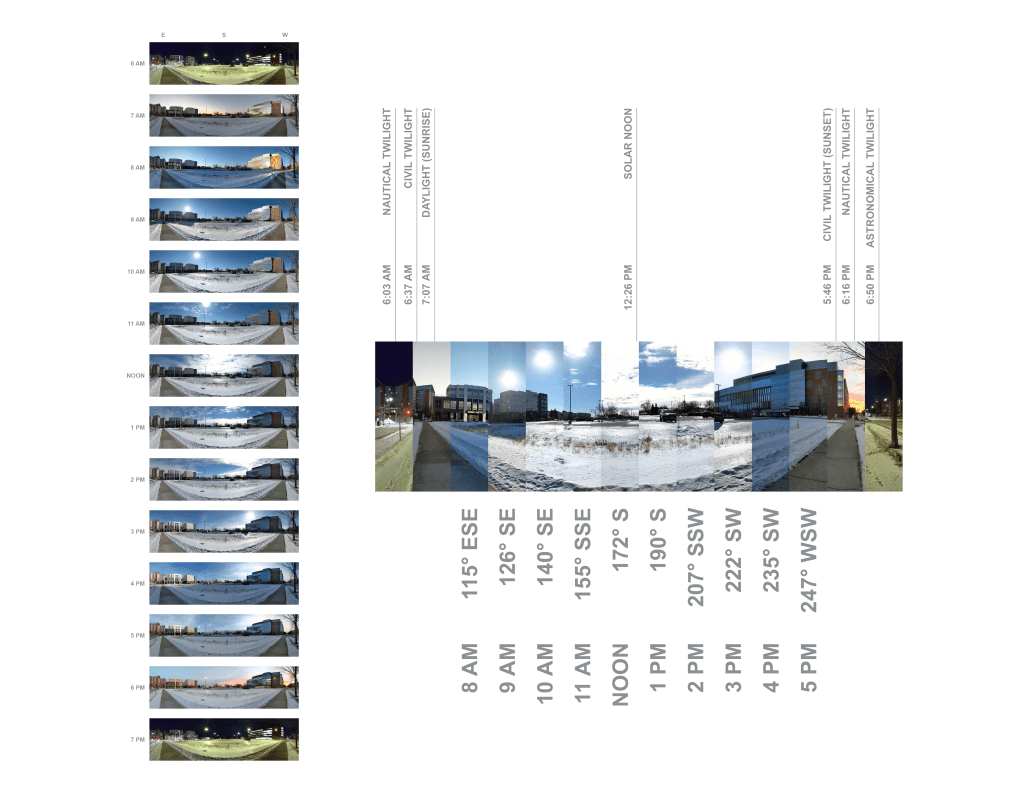
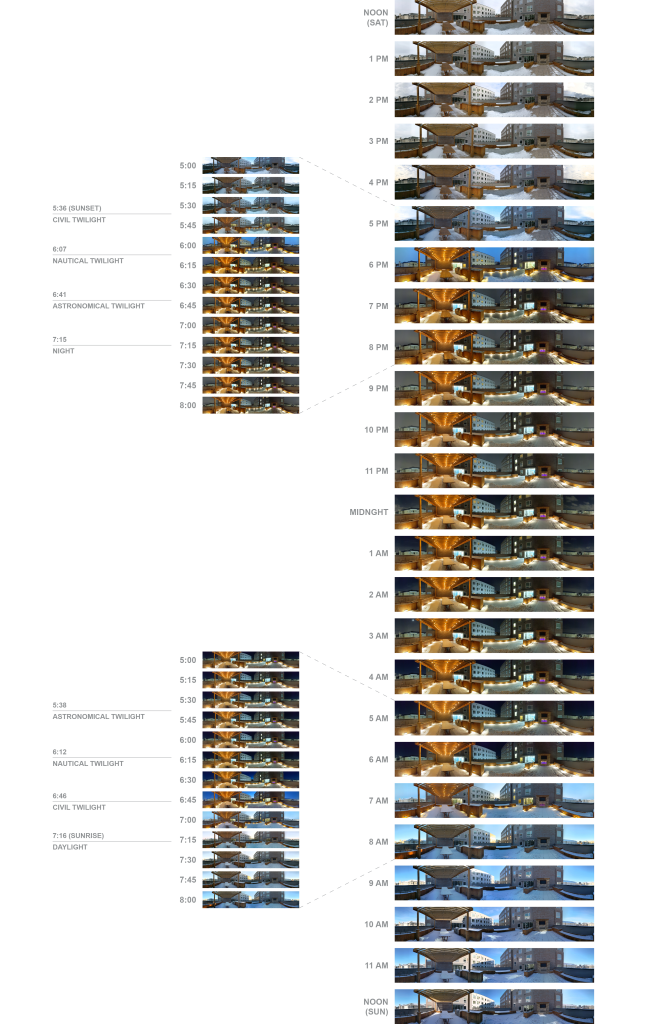
Using rigorous processes, this project emphasizes the dynamic qualities of the
sun’s interaction with Earth and its perceived movement from Earth throughout
the day and year. Some of these processes—such as the change in altitude of the
sun’s path throughout the year—are very gradual, and for those processes, being
able to track and represent them at a large time scale becomes advantageous.
Some other processes—such as the transition between day and night in the
twilight hours—happen on a smaller time scale, but capturing multiple moments
within the change is important due to the large change in daylight and color
between day and night. Furthermore, there are instantaneous moments—such as
solar noon of the solstices or equinoxes—which in this project are architecturally
communicated through representations of current conditions and in imagined
spaces.
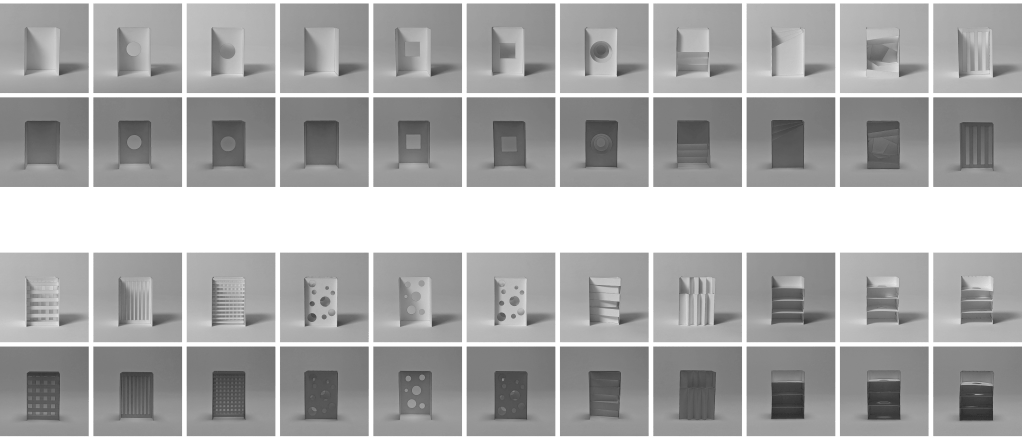
photographed with diffused lighting from the side and from directly overhead.
Representing Subjective Experiences of the Sun
A major theme in this project is the exploration of representations of the sun
and its effects, in order to find a deeper understanding of how daylight interacts
in inhabited space and how it is perceived at the human level. These explorations
include collection of data at the human scale in addition to experimentation with representations that tell the story of that process. One example is a study where
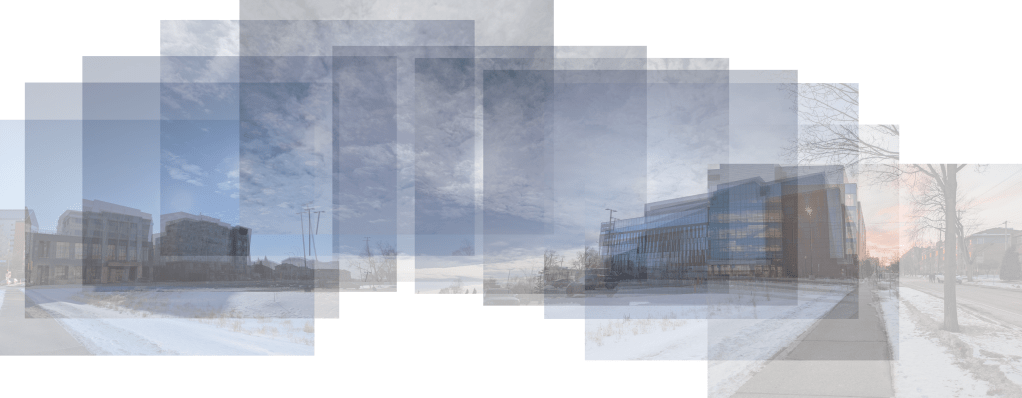
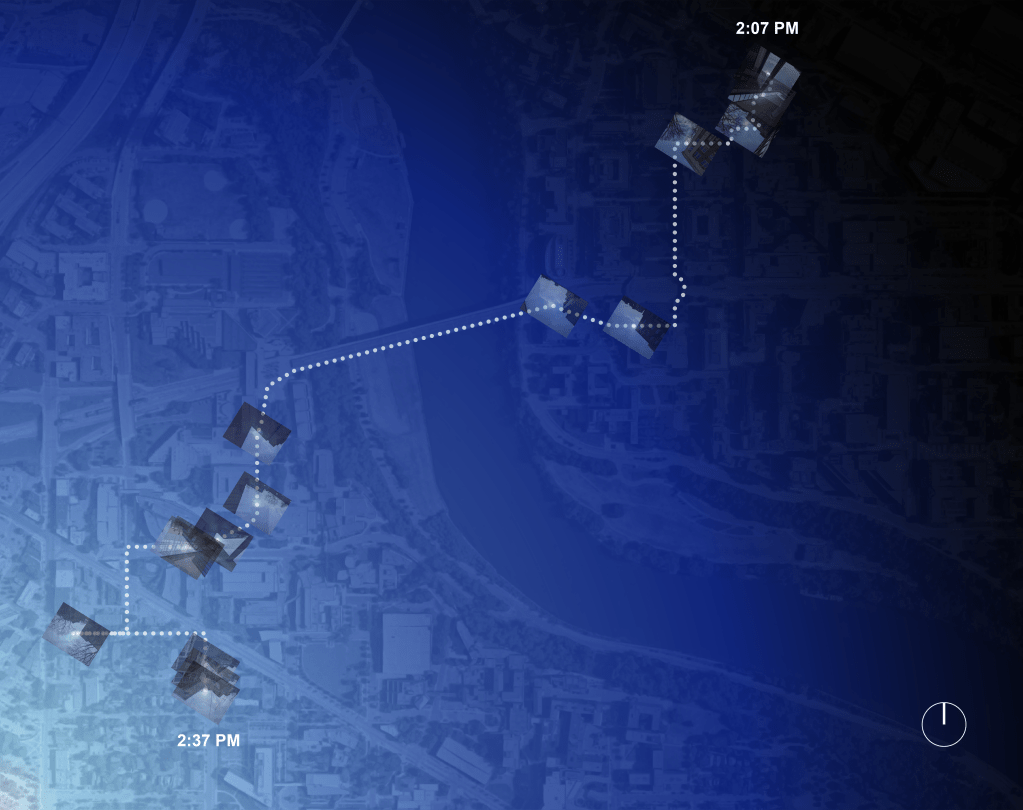
I took photographs of the sun in Minneapolis for thirty minutes while walking
towards it. The simple rules dictating this study were as follows:
- Walk towards the sun
- If something obstructs my view of the sun, keep walking towards the sun until it reappears
- When it reappears, take a photo of the sun such that it is centered in the frame
- Repeat the above steps
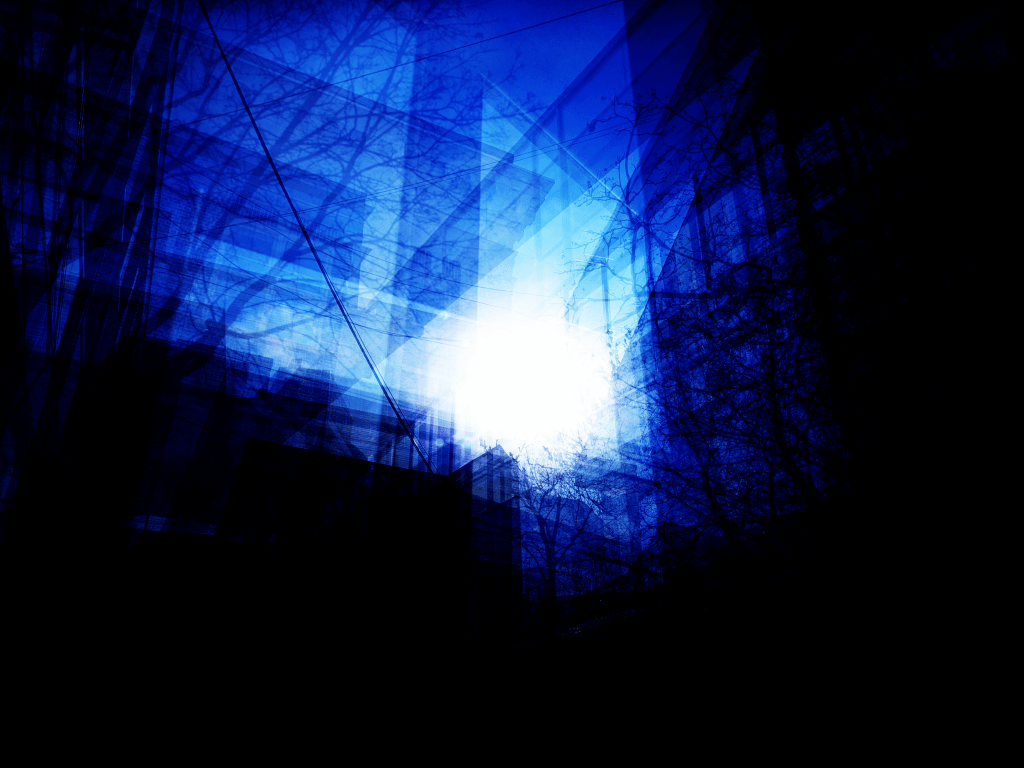
After collecting the photos from this study, the photos were overlaid and
Photoshop blending modes were experimented with to produce the image
on the left which demonstrates the spatial qualities of daylight in the urban
environment of Minneapolis, and the perception of being drawn towards the
source of the daylight.
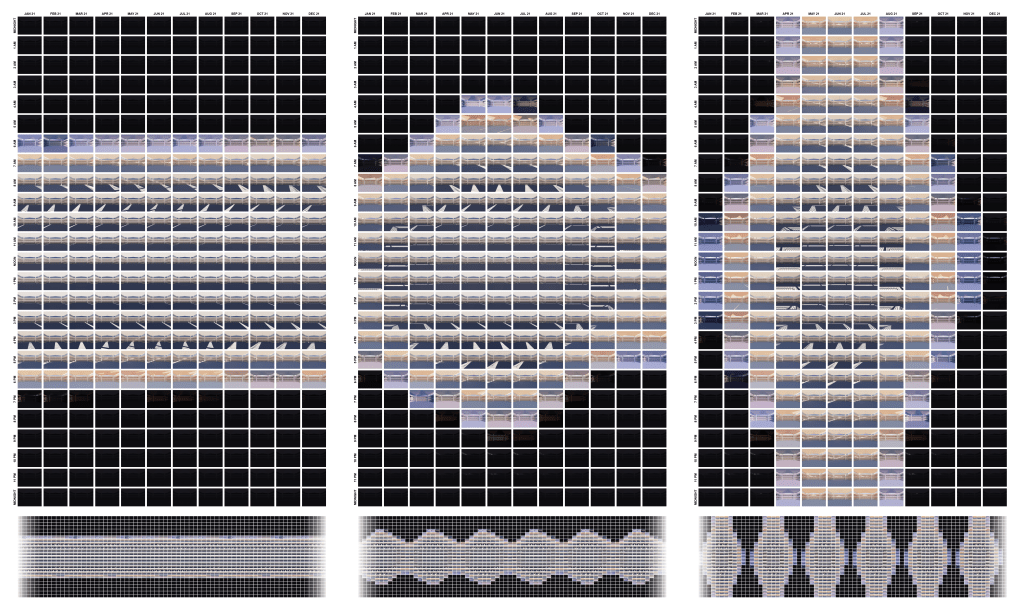
Other studies tracked the movement of the sun from a single location over a
long period of time. The movement of the sun in these studies are represented by
a collage of overlaid images which were taking by pointing the camera towards
the sun or its perceived direction when it was being obstructed. In all of the
studies described, the first-hand experience of being in the environment and
collecting the photographic data became part of the learning process of the effects of daylight. Daylight can be understood in the abstract through quantitative and technical measurements, but it must also be understood through
perception, since the perceived movement and effects of the sun from Earth are
key to fully understanding its architectural value.
The representations made can be generative for architecture by informing
how daylighting is received by built and unbuilt environments. They have the
ability to communicate experiences that are not just instantaneous but also
dynamic.
Combining Simulation With Real-World Studies
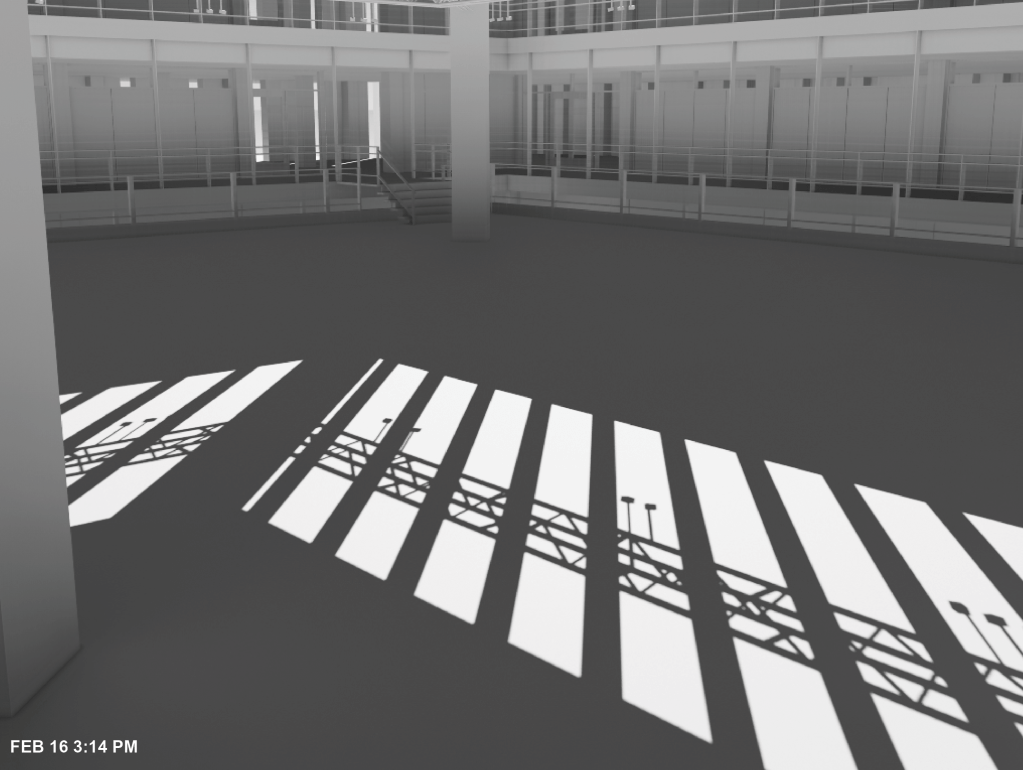
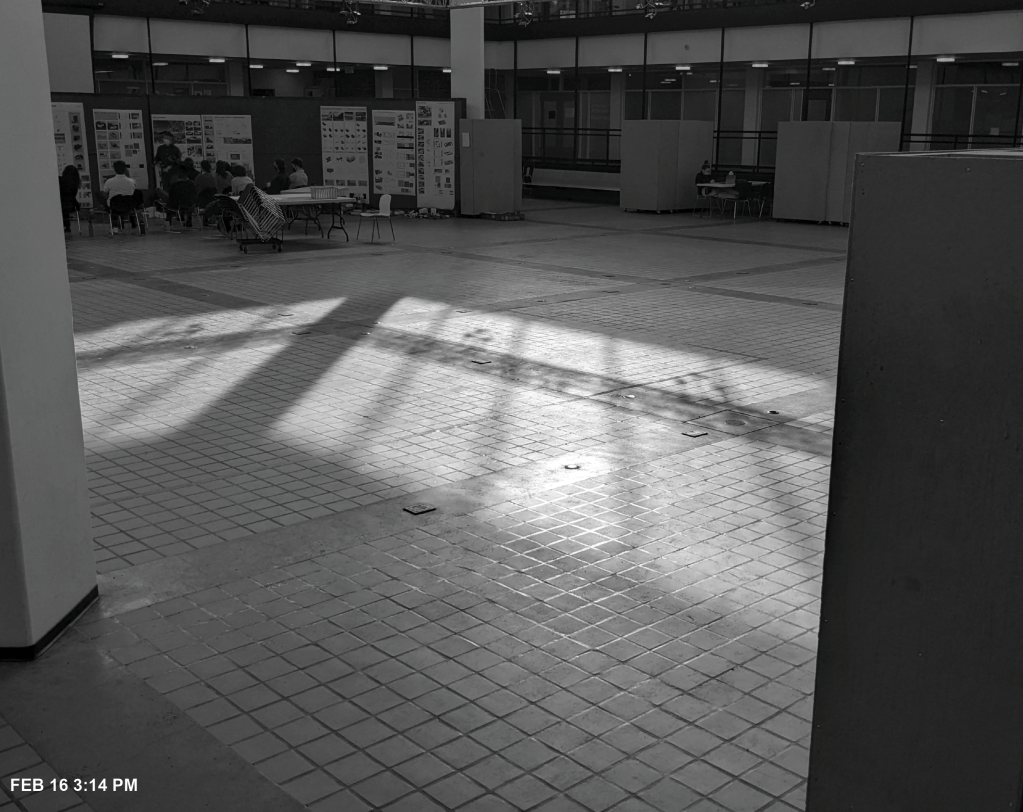
Architectural designers make use of both simulated realities in addition to
real-world data and documentation when developing an architectural proposal.
These simulated realities can include renderings, digital models, physical models,
and energy models. Real-world data can include site statistics, site climate
data and photography. With respect to daylighting considerations, there is an
important need to be aware of the advantages and disadvantages of simulated
and real-world studies. Simulation has the advantage of being able to give
control over many variables, such as weather conditions, presence of people,
artificial lighting, and location of furniture and people, which can be useful
when assessing the change in other variables. Furthermore, simulation has the
advantage of projecting conditions of proposed possibilities which can be useful
in testing many options rapidly and learning from them. However, all simulations are selective in the variables which are accounted for and neglected, and the
neglect of these variables can be mitigated by combining the simulations with
real-world data. When combined, these two categories of study serve to produce
an ideal understanding of daylighting.
Technical and Experiential Qualities of Daylight in Dialogue
Today, in solar-inspired architectural design, understanding the technical
aspects of daylighting, such as the sun’s altitude, azimuth, length of day, and
daylight availability often play a large role in the development of architectural
form and placement of features such as photovoltaic panels, but these technical
understandings are not always made salient at the human experiential level. This
can be done with simple interventions that are nonetheless carefully determined.
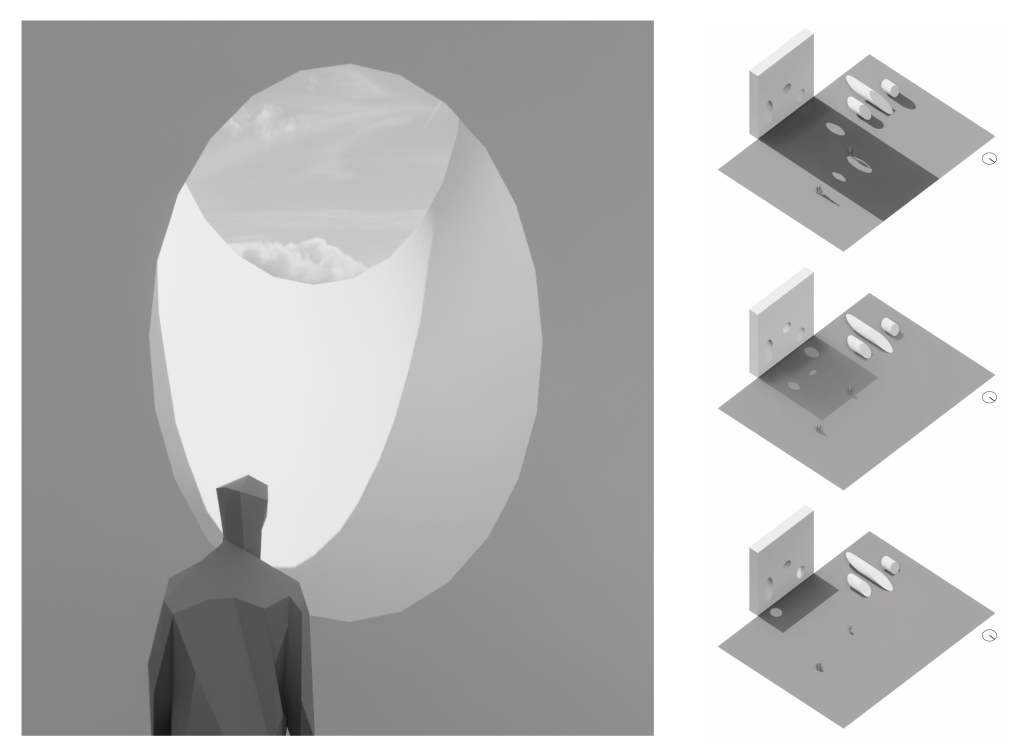
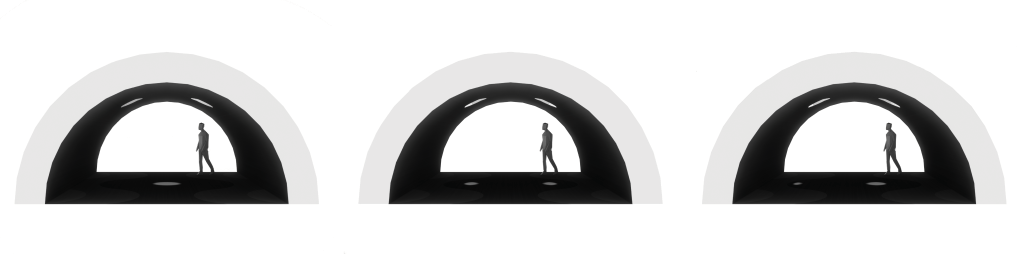
For example, the folly shown on page 13, designed to be placed in a vacant
property near the corner of Erie and Fulton Streets in Minneapolis, consists of
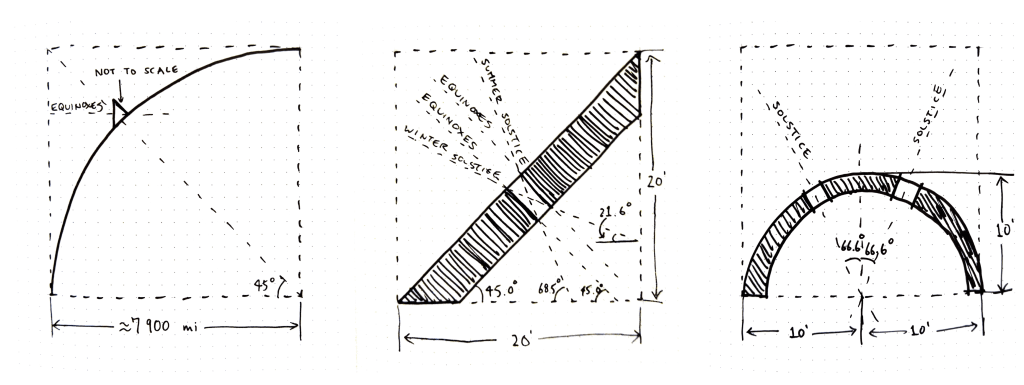
three voids in a large wall. These three voids were subtracted using the same
cylindrical form, but the pitch of the cylinder was aligned to the altitudes of the
sun at solar noon on the equinoxes and each of the solstices. The mathematics
involved in the design are precise, but the sheer scale of the wall also allows for
a rich experience at the human scale even when there is no direct daylight, as the
voids draw one’s view upward.
Celebrating Location
People at different latitudes experience the sun differently, and this theme of
varied subjective experiences depending on location on Earth is a major theme
in this project’s explorations. One series of studies explored how a folly would
respond differently to local daylighting conditions when its location was simply
defined by latitude instead of a specific location. Moments such as the equinoxes
and the solstices are highlighted in the latitudes of the equator, 20° N, and 45°
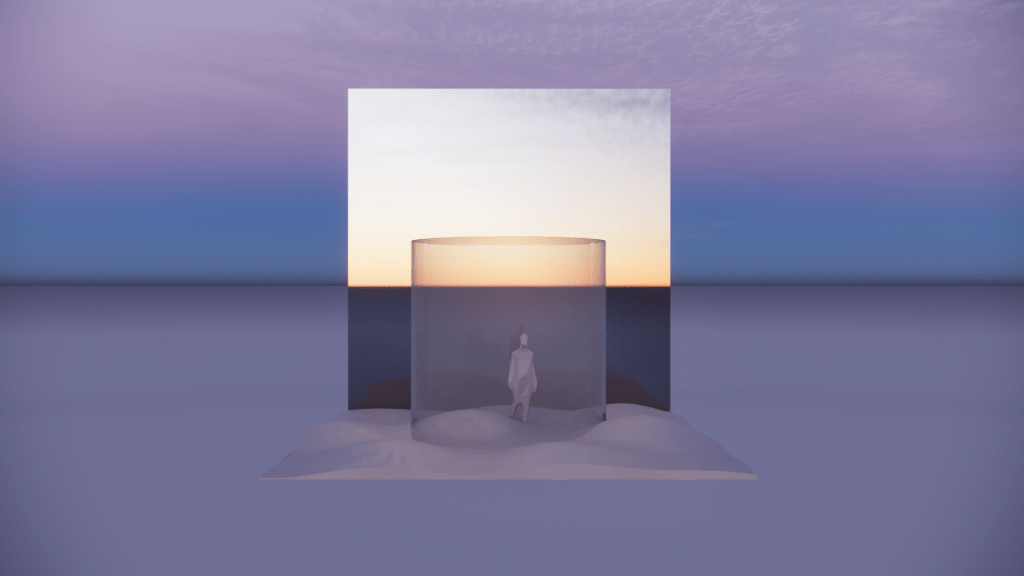
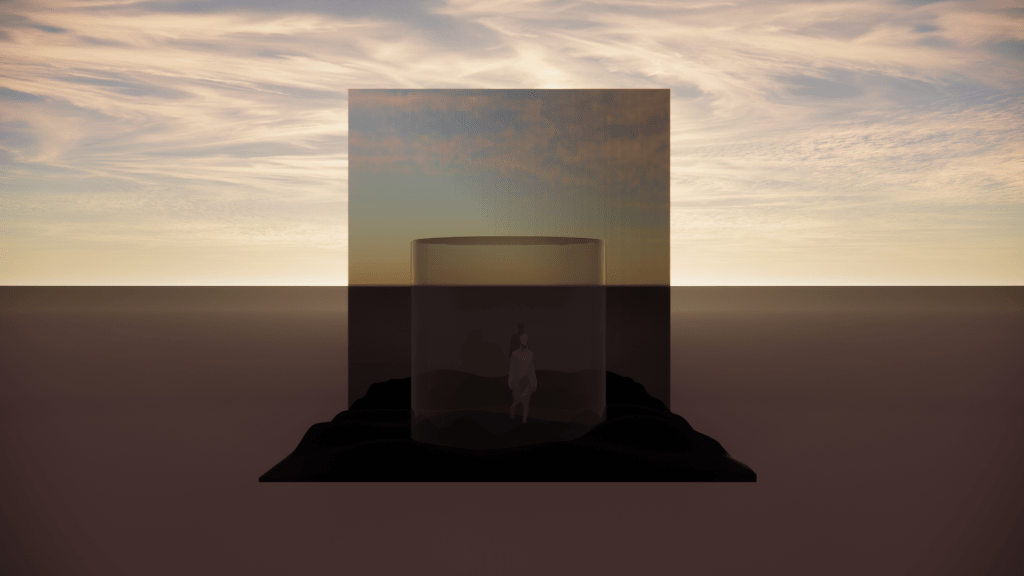
N. However, for the folly at the latitude of 70°N, the unique Arctic condition of
having no daylight in midwinter and 24 hours of daylight in midsummer became
the conceptual driver. Unlike the follies at the other locations, which carefully
employed geometric calculations to project light and shadow, the Arctic folly’s
largest feature is a vertical mirror measuring 20 feet by 20 feet which faces due
south. This mirror highlights the regionally unique conditions of twilight at noon
in winter, and the midnight sun in the northern direction in the summer.
Conclusion
Daylight is essential to architecture and should always be considered at
technical and experiential levels. Technical and experiential knowledge can
inform experimentation which can ultimately lead to architecture which acknowledges and celebrates moments, transition, location, and atmosphere. Because daylight is a free resource, and is accessible throughout the entire world, it has
an immense potential to form and be formed by architecture. My hope is that the series of experiments and designs which I have engaged in can serve as an introduction to this potential.
Citations
- Oxford English Dictionary.
Selected Bibliography
Elkadi, Hisham, and Sura Al-Maiyah. Daylight, Design, and Place-Making. London,
UK: Routledge, 2020.
Guzowski, Mary. The Art of Architectural Daylighting. London, UK: Laurence King
Publishing, 2018.
Magli, Giulio. Archaeoastronomy: Introduction to the Science of Stars and
Stones. Cham, Switzerland: Springer Nature Switzerland AG, 2020.
Phillips, Derek. Daylighting: Natural Light in Architecture. Burlington, MA:
Architectural Press, 2004.
Acknowledgements
I would like to thank Gayla Lindt, Jill Gelle, and Grace Kelly for your feedback and guidance throughout this semester.
 Megumu Jansen